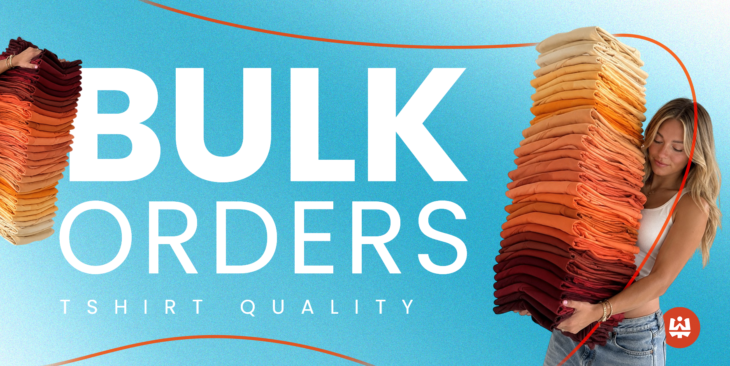
What Actually Determines Bulk T-Shirt Quality for Your Brand
Bulk T-Shirt Quality / B2B Manufacturing / 4 Min Read
Every brand asks “is the quality good?” before placing a bulk order. Nobody asks what actually determines it. Bulk T-shirt quality is not one thing. It is three decisions your manufacturer makes — mostly without telling you.
Your retailer does not read spec sheets. They do not check GSM numbers or fibre certificates. Instead, they pick up the T-shirt, feel it, and fold it. And in three seconds, they decide whether your brand is worth reordering from.
That three-second decision is built over three weeks of production. And it starts long before the first stitch.
This is what actually determines bulk T-shirt quality — and why most brands only find out when it is too late.
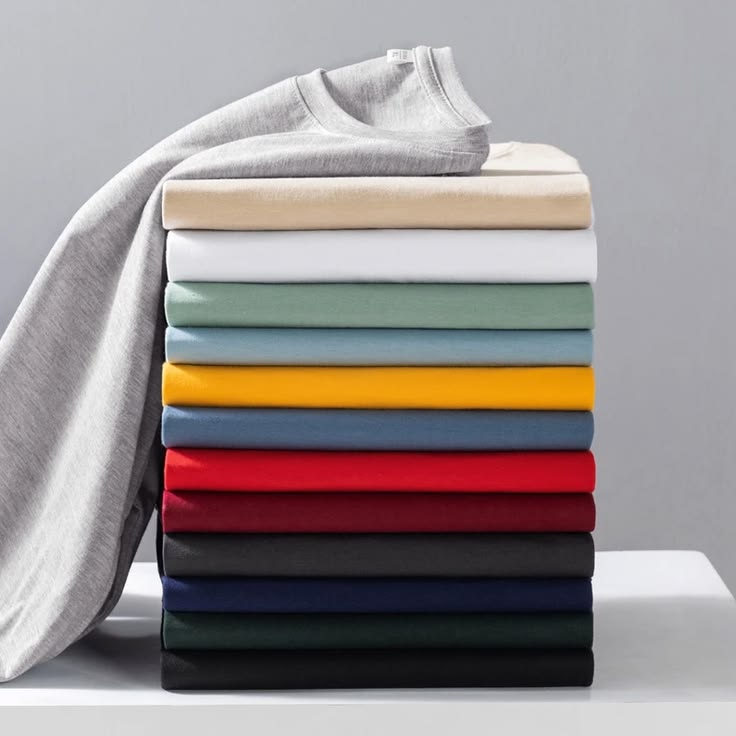
1. Bulk T-Shirt Quality Starts With a Fabric Decision Nobody Discusses
Every bulk order begins with a fabric purchase. The manufacturer calls their supplier, confirms the quantity, and the fabric arrives. Production starts shortly after. Nobody told you this happened — and nobody asked your opinion.
That fabric purchase is the single most important quality decision in your entire order — and most B2B brands have no visibility into it whatsoever.
What Changes Inside the Fabric Without Changing the Price
Here is what most manufacturers will not tell you. Fabric suppliers adjust their material quietly. They change the cotton source, reduce the yarn count, or shift the fibre blend — from 100% cotton to a cotton-polyester mix — without announcing it. As a result, the price stays the same and the roll looks identical. However, the fabric behaves differently after washing, after wearing, after a retailer’s customer puts it through a regular week.
Bulk T-shirt quality that holds up across fifty washes starts with the right fibre at the right GSM. GSM — grams per square metre — tells you how dense and heavy the fabric is. According to T-Shirt Elephant’s fabric weight guide, 160 to 180 GSM is the most recommended range for bulk orders — balancing comfort, structure, and print quality consistently across seasons. A T-shirt at 180 GSM holds its shape, holds its colour, and holds its structure far better than one at 150 GSM. The difference is not visible on delivery day. It shows up thirty days later, at your retailer’s end, when the customer brings it back or simply does not buy again.
The manufacturer knows this. However, if they are buying fabric on price — which most do when margins are tight — they are making a quality decision for your brand without consulting you.
The fix is straightforward: ask your manufacturer to confirm the fabric GSM and fibre composition in writing before production begins. Not after. Not on the invoice. Before. If they cannot provide this, the fabric decision has already been made — and you were not part of it.
Read: How to Prevent T-Shirt Fading in Bulk Orders — fading is almost always a fabric sourcing decision, not a printing problem.
2. The Stitching Standard Your Manufacturer Set Years Ago Is Still Running Your Order
Every manufacturer has a default stitching standard. They set it years ago, based on the machines they bought, the workers they trained, and the price point they decided to operate at. Consequently, that standard runs every order — yours included — unless you specifically ask for something different.
Most B2B brands never ask.
Why Stitching Is the Quality Factor Retailers Feel First
Bulk T-shirt quality is not just about how the fabric feels. It is about how the garment holds together after repeated use, repeated washing, and repeated handling by retail staff and end customers.
Stitching determines three things your retailer notices immediately — how clean the seams look, how the overlock sits on the inside, and whether the collar holds its shape after the first wash. As Successful Fashion Designer’s quality control guide explains, stitching inspection must happen during production — not just at the end — because defects identified mid-production can be corrected before they multiply across the entire batch. A collar stitched at the wrong tension loses shape after two washes. A side seam with insufficient stitch density opens under pressure.
None of these are visible on delivery day. They all show up in use.
Furthermore, stitching consistency across a bulk order is as important as the standard itself. A manufacturer running 500 pieces across three machines — with different operators, different thread tensions, and different speeds — will produce variation. Some pieces will be tighter. Others will be looser. As a result, your retailer will notice the difference when they open the box and compare pieces side by side.
The question to ask your manufacturer before production is not just “what stitch do you use” — it is “how do you ensure consistency across the full batch.” A manufacturer who cannot answer that question clearly is a manufacturer whose stitching standard is whatever came out that day.
Consistent bulk T-shirt quality requires a consistent production process — not just a good sample.
3. Bulk T-Shirt Quality Is Decided at the Sample Stage — Not the Bulk Stage
The sample is the most important document in your bulk order. Not the invoice. Not the spec sheet. The sample. Because every quality decision — fabric weight, stitch density, collar construction, overlock finish — is set at the sample stage. The bulk follows that standard. Or it should.
Why the Bulk Rarely Matches the Sample
Here is the gap most B2B brands experience but cannot explain. The sample was perfect. The bulk arrived different. The fabric feels slightly lighter. The collar sits differently. The colour is a shade off.
This happens because the sample and the bulk are often not made the same way. The sample is made carefully, by a senior worker, with the best available fabric, under close supervision. In contrast, the bulk is made at speed, by multiple workers, across multiple machines, under production pressure. The manufacturer did not deceive you. They simply did not maintain the standard.
The only way to close this gap is a pre-production approval process. Before bulk production begins, the manufacturer should produce a pre-production sample — made from the actual bulk fabric, on the actual production machines, by the actual production team. The Odd Factory’s garment quality control guide confirms that skipping this step is one of the most common reasons bulk orders fail to match the approved sample — because the sample and the bulk are simply not made under the same conditions. That sample should be approved before a single piece of bulk is cut.
Most manufacturers skip this step because it takes time and costs a small amount. Similarly, most B2B brands do not ask for it because they do not know it exists. Therefore, the result is a bulk order that almost matches the sample — and a retailer who almost reorders.
Before approving your next sample, read: Never Lose Money on a Bulk T-Shirt Sample – Ultimate Checklist — what to check before you sign off.
What to Put in Writing Before Your Next Bulk Order
Bulk T-shirt quality is not a feeling. Rather, it is a specification. Here is what every B2B brand should confirm in writing before production starts:
- Fabric GSM: Minimum 180 GSM for standard T-shirts — confirmed on the invoice or fabric certificate
- Fibre composition: 100% ring-spun cotton or agreed blend — in writing, not verbal
- Stitching standard: Stitch type, stitch density, and overlock specification — confirmed on the tech pack
- Pre-production sample: Made from bulk fabric on bulk machines — approved before cutting begins
- Consistency check: How the manufacturer ensures the last piece matches the first across the full batch
These are not difficult requests. A manufacturer who takes bulk T-shirt quality seriously will answer all five without hesitation. A manufacturer who cannot — or who says “trust us, it will be fine” — is telling you exactly what your retailer will feel when the order arrives.
Ready to Get Bulk T-Shirt Quality Your Retailers Actually Reorder?
At Tackle World, we have been manufacturing premium T-shirts in Delhi since 1998. We confirm fabric GSM and fibre composition before every order, produce pre-production samples on bulk machines, and maintain stitching consistency across every batch — whether it is 100 pieces or 10,000. Over 500 brands across Delhi trust us because we treat bulk T-shirt quality as a specification, not a promise.
If your retailer is not reordering — the answer is in the quality. And the quality starts here.
🌐 www.tackleworld.in 📸 @tackleworldindia — DM us on Instagram 📧 info@tackleworld.in 📞 +91-78408 91269 📍 CB-372, Ring Road Naraina, Delhi 🕗 Office Hours: 8:00 AM – 7:45 PM
Trusted by 500+ brands in Delhi — because bulk T-shirt quality is built before the order is placed, not fixed after the retailer calls.s placed, not fixed after the retailer calls.