How to Prevent T-Shirt Fading in Bulk Orders
T-Shirt Fading / Bulk Order Quality / 4 Min Read
As one of India’s largest garment manufacturing hubs, Delhi has hundreds of fabric suppliers — from Chandni Chowk to Naraina to Gandhi Nagar. Some sell premium cotton. Many sell something that looks identical — until it’s washed four times.
Most manufacturers don’t choose the wrong fabric on purpose. They source the fabric, stitch the garment, finish it, label it, pack it, and deliver it to your door — your warehouse, your store, or your client’s office.
But somewhere in that chain, the manufacturer makes one decision on autopilot — the fabric supplier. They don’t ask questions. They don’t switch. Even when clients stop coming back, even when complaints pile up, even when reorders dry up.
T-shirt fading starts with fabric quality. That fabric comes from a bulk fabric supplier. And that supplier is exactly where a manufacturer must be careful, especially when producing for large orders.
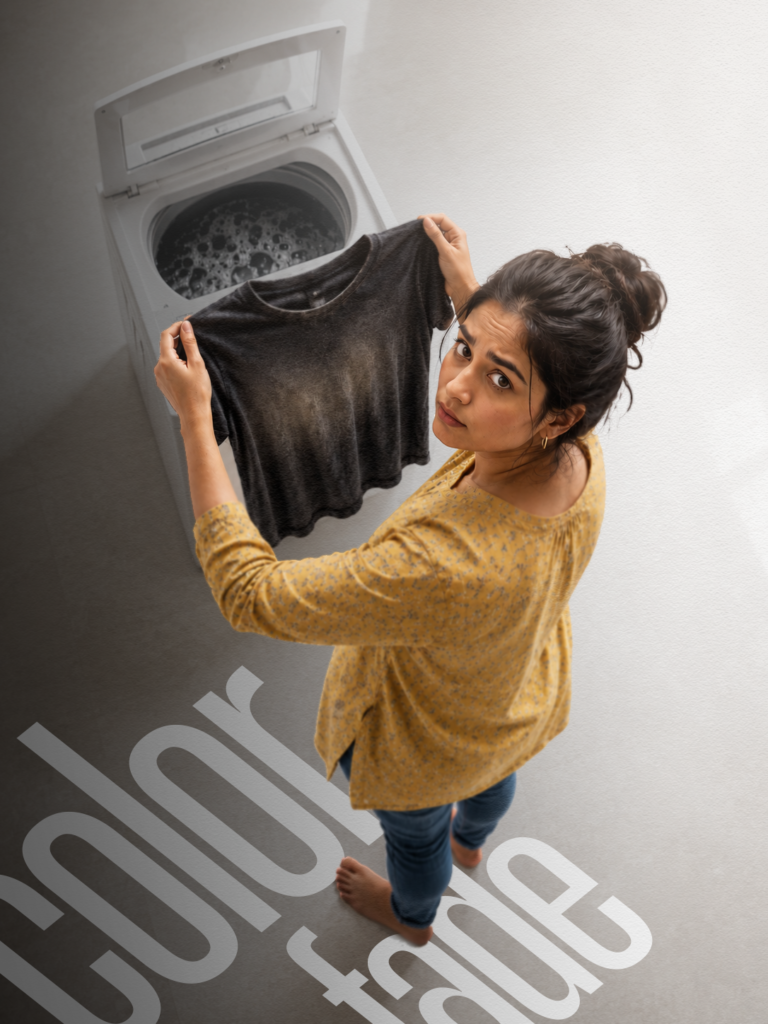
1. The Fabric Supplier Has Not Changed in Years — and T-Shirt Fading Started There
Most manufacturers have been buying fabric from the same supplier for three, five, sometimes ten years. That relationship started well. The fabric was good. The GSM — that is the weight of the fabric, measured in grams per square metre — was consistent. Deliveries were on time. So the manufacturer kept reordering.
But fabric suppliers change things quietly. They change their cotton source, their yarn blend, or their finishing process. They mix in synthetic fibres — like polyester — to cut costs, without announcing it. The fabric still looks the same. It still feels close enough. But after three washes, your client’s T-shirt looks like it has been worn for two years.
Why T-Shirt Fading Goes Unnoticed Until It Is Too Late
T-shirt fading that starts early — within the first five to ten washes — is almost always a fibre quality problem. Pure cotton holds dye far better than a cotton-polyester mix. According to CottonBee’s colour fastness guide, cotton’s natural fibre structure allows deep dye penetration — but only when the fibre quality and pre-treatment are right. A fabric with a lower GSM, say 140 to 160 GSM instead of 180 to 200 GSM, holds less dye and fades faster. These are not visible differences at the time of ordering. Therefore, they are easy to miss — unless the manufacturer is actively checking.
The problem is that most manufacturers are not checking. They trust the supplier. Moreover, because the issue only shows up weeks after delivery — at the client’s end, not the factory’s — there is no immediate feedback. The manufacturer does not know there is a fading problem. The client just does not reorder.
This is the real cost of an unchanged supplier relationship — not just fading T-shirts, but lost accounts that never explain why they left.
Also read: How to Prevent Loose Overlock in Your Bulk T-Shirt Order — another quality issue that starts at the production stage, not after delivery.

2. T-Shirt Fading Happens When GSM and Fibre Blend Are Never Verified
Every time a manufacturer places a fabric order, the manufacturer must confirm two things in writing: the GSM and the fibre composition. GSM — or Grams per Square Metre — tells you how heavy and dense the fabric is. A higher GSM means more fibre per metre, better dye retention, and a T-shirt that holds up after repeated washing. Fibre composition tells you what the fabric is actually made of — 100% cotton, or a mix of cotton and polyester, or something else entirely.
In practice, manufacturers confirm neither consistently. The manufacturer calls the supplier, places the order verbally or over WhatsApp, and the fabric arrives. It looks right. The colour is acceptable. Production starts.
Nobody tested whether the GSM matches what was agreed. Nobody confirmed that the fibre blend is the same as the last order. And because fabric testing — sending a sample to a lab, or using a GSM cutter and weighing scale on-site — takes time and costs a small amount, the manufacturer skips it. Especially when the order is large and the deadline is close.
What Happens to the Fabric When Nobody Checks
The result is a T-shirt that looks fine on day one and fades badly by day thirty. The dye sits in the outer layer of the fibre rather than penetrating the fabric properly. This happens when the cotton content is too low, or when the supplier treats the fabric with surface finishes — like optical brighteners or softeners — that mask the real texture but reduce dye absorption.
Furthermore, a low GSM fabric — anything below 170 GSM for a standard T-shirt — simply does not hold dye the same way. The threads are lighter, the weave is looser, and there is less fibre for the dye to bond with. Washing pulls the dye out faster.
The fix is straightforward: before any large order, the manufacturer should weigh a fabric swatch on a GSM scale and cross-check the fibre content on the fabric roll label. If the supplier cannot confirm the fibre blend in writing — on an invoice, a delivery note, or a fabric test certificate — that is a signal worth taking seriously.
3. The Fabric Was Bought for Price, Not for Performance
This is the most common reason for T-shirt fading in bulk orders — and the least talked about. When a manufacturer needs to keep the per-piece cost low, one of the easiest places to cut is the fabric. A lower-grade cotton, a thinner fabric, or a blended fabric costs less per metre. On a 500-piece order or a 1,000-piece order, that saving adds up quickly.
The manufacturer is not always making this choice to deceive anyone. Often, they are trying to match a price that the client has asked for. The client wants 200 T-shirts at Rs 120 per piece. The manufacturer works backwards. At that price, the only way to make the numbers work is to use a cheaper fabric. So they do. And neither party discusses what that means for the T-shirt after five washes.
Why the Complaint Always Arrives Too Late
The T-shirt looks fine at delivery. It fades quickly in use. The client blames the manufacturer. The manufacturer blames the print or the wash. Nobody looks at the fabric — because the manufacturer made that fabric decision weeks earlier and nobody can trace it by the time the complaint arrives.
As LA Vintage Laundry’s fabric dyeing guide explains, cotton-polyester blends absorb dye unevenly — cotton fibres take on more colour than polyester, which leads to inconsistent fading and a patchy finish after a few washes. This is why fibre composition matters as much as GSM. The manufacturer made that decision before production even started — when they ordered the fabric from a supplier chosen partly for price, with no written specification for GSM, fibre content, or dye retention.
The correct approach is to separate the fabric specification from the price negotiation. The manufacturer should fix the minimum fabric standard first — for example, 100% ring-spun cotton at 180 GSM — and then price the order based on that standard. If the budget does not support that standard, the conversation should happen openly, before production, not quietly at the fabric sourcing stage.
Before placing your next bulk order, read: Why Urgent Bulk T-Shirt Order Costs Your Business More Than You Think — rushing an order often means skipping the fabric checks that prevent fading.

Guide for what to Put in Writing Before Your Next Order
T-shirt fading is preventable. However, it requires one thing — the manufacturer must agree on the fabric specification and write it down before production starts. Here is what to ask for:
- Fabric GSM: Minimum 180 GSM for standard T-shirts, minimum 200 GSM for oversized or heavier styles
- Fibre composition: 100% ring-spun cotton, confirmed in writing on the invoice or fabric test certificate
- Fabric supplier: Ask the manufacturer to name their fabric supplier and confirm the source has not changed since the last order
- Wash test: Request a pre-production wash test on a sample — five washes minimum — before bulk production begins
- Fabric test certificate: For large orders above 300 pieces, ask for a fabric test certificate from the supplier confirming GSM and fibre content
These are not unusual requests. A manufacturer who takes quality seriously will have no difficulty providing any of the above. A manufacturer who cannot — or will not — answer these questions is the same manufacturer whose T-shirts are most likely to fade.
Ready to Order T-Shirts That Do Not Fade?
At Tackle World, we have been manufacturing premium T-shirts in Delhi since 1998. We work with verified fabric suppliers, confirm GSM and fibre content on every order, and conduct wash tests before bulk production begins. Over 500 brands across Delhi trust us — because we treat fabric sourcing as a decision, not a habit.

If you are placing a bulk T-shirt order and want to make sure T-shirt fading is not a problem three washes from now, speak to our team before you brief the factory.
📸 @tackleworldindia — DM us on Instagram
📞 +91-78408 91269
📍 CB-372, Ring Road Naraina, Delhi 🕗 Office Hours: 8:00 AM – 7:45 PM